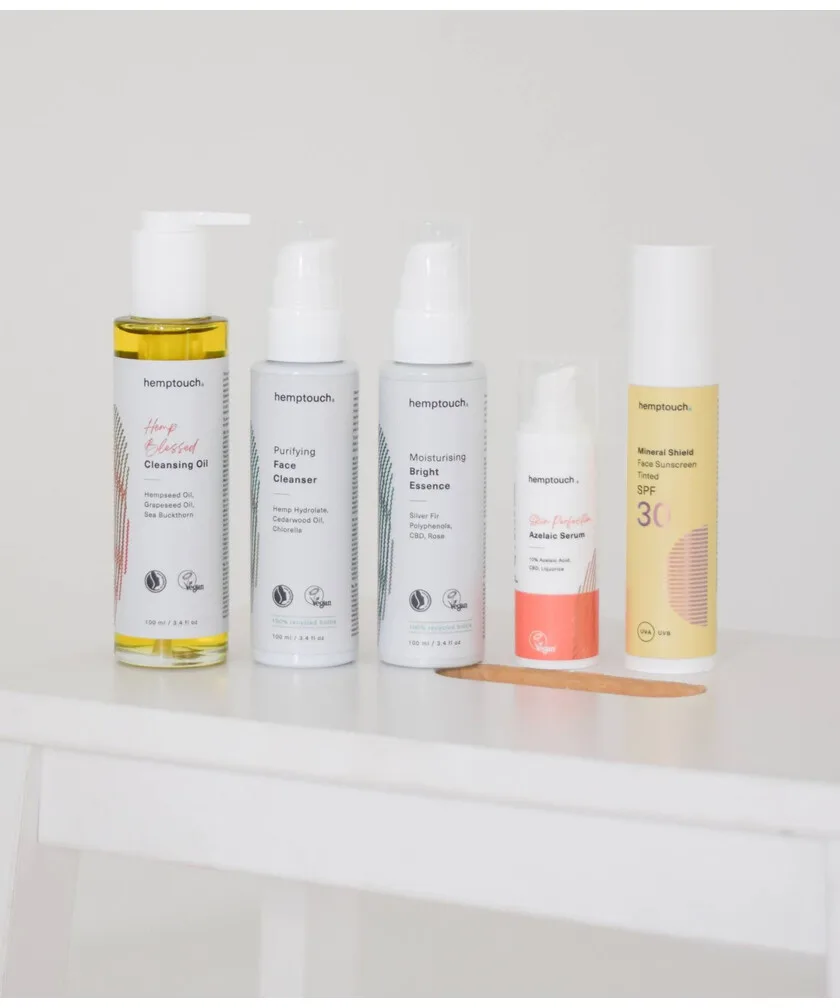
You cleanse your face every evening, but your pores still seem congested and your skin often feels tight afterwards. Sound familiar? The problem might not be your cleanser. It could be how you're using it.
Cleansing is one of the most important steps in any skincare routine, yet it's often the one we rush through. A few quick movements, a splash of water, and we're already reaching for our serum or moisturiser.
But removing make-up, SPF, excess sebum and the daily build-up of impurities takes more than a quick rinse. How you use your cleanser matters.
That's where the 60-second rule comes in.
What Is the 60-Second Rule?
The idea is simple: instead of applying your cleanser and rinsing it off almost immediately, spend around 60 seconds gently massaging it into your skin.
This gives the formula time to spread evenly, reach areas that are easy to miss and help break down the impurities sitting on your skin.
It's particularly useful when using an oil cleanser, as oil-based formulas are designed to dissolve oil-soluble substances, including sebum, make-up and water-resistant SPF.
That said, 60 seconds isn't a magic number. It's a useful guideline, not a rule that every skin type or cleanser needs to follow. Always consider your skin's sensitivity and the product's instructions.
Why Does Oil Cleansing Work?
Using oil to cleanse skin that already produces oil might sound counterintuitive. But there's a good reason it works.
Oil-based cleansers are particularly effective at dissolving oil-soluble impurities, including excess sebum, make-up and sunscreen.
A well-formulated cleansing oil also contains emulsifiers. When you add water, the oil transforms into a milky emulsion that can be rinsed away, taking dissolved impurities with it.
The result? Thorough cleansing without the need for aggressive rubbing.
And remember: that squeaky-clean feeling isn't the goal. Your skin should feel clean, soft and comfortable after cleansing, not tight or stripped.

How to Use an Oil Cleanser Properly
1. Start with dry skin and dry hands
Apply your cleansing oil directly to dry skin.
This allows the oil to work on make-up, SPF and other oil-soluble impurities before you introduce water and begin emulsifying.
2. Massage gently for around 60 seconds
Using your fingertips, massage the oil across your face in slow, circular movements.
Pay particular attention to areas where sebum and impurities tend to accumulate, such as around the nose, chin, jawline, hairline, forehead and T-zone.
There's no need to apply pressure or scrub. You're allowing the cleanser to do the work, not trying to physically remove impurities.
If your skin is particularly sensitive or irritated, keep the massage shorter.
3. Add a little lukewarm water
Add a little water to your hands and continue gently massaging your skin. As the oil comes into contact with water, it transforms into a silky, milky emulsion that helps lift away impurities and allows them to rinse off more easily.
Don’t skip this step – proper emulsification is key to getting the most out of your oil cleanser.
4. Rinse thoroughly
Rinse with lukewarm water until the cleanser has been completely removed.
Avoid hot water, which can contribute to dryness, and gently pat your face dry with a soft towel.
No rubbing required.
Can Oil Cleansing Help with Congested Pores and Blackheads?
Blackheads form when sebum and dead skin cells accumulate inside a hair follicle. When this material comes into contact with air, it oxidises and darkens.
Oil cleansing can help remove excess sebum and surface impurities, making it a useful step for skin prone to congestion.
However, it's important to manage expectations.
Massaging an oil cleanser into your skin for longer won't necessarily remove blackheads or clear deeper blockages. In fact, excessive massaging, pressure or attempting to manually extract blackheads can cause irritation.
For persistent blackheads, targeted ingredients such as salicylic acid may be more appropriate.
Consistency and gentle cleansing will generally serve your skin better than aggressive techniques.
Can You Use an Oil Cleanser If You Have Oily Skin?
Absolutely. Oil cleansers aren't exclusively for dry skin.
Oily and combination skin still need effective cleansing to remove excess sebum, SPF and daily impurities without unnecessarily disrupting the skin barrier.
What matters is the formulation.
A well-formulated cleansing oil should emulsify when mixed with water and rinse away without leaving an unwanted greasy residue.
The aim is to cleanse the skin effectively, not strip away every trace of its natural oils.
Meet Hemptouch Omega Oil Cleanser
At Hemptouch, we believe effective skincare starts with gentle, thorough cleansing.
Our Hemptouch Omega Oil Cleanser is designed to remove make-up, SPF, excess sebum and the impurities that accumulate throughout the day, without leaving your skin feeling stripped.
Its oil-based texture glides comfortably over the skin, allowing you to massage without unnecessary friction.
Add a little water and the formula transforms into a milky emulsion that rinses away easily, leaving skin feeling clean, soft and comfortable.
It's particularly useful as part of your evening routine, especially if you wear make-up or SPF during the day.
Because effective cleansing shouldn't come at the expense of your skin barrier.

Hemp Blessed Cleansing Oil 100 ml
A conditioning cleanser gently yet effectively cleanses the skin, removing makeup, sunscreen, and impurities without irritation fo.. Details
£19.50
Double Cleansing: Do You Actually Need It?
Double cleansing involves washing your face in two steps.
The first cleanse typically uses an oil-based formula to dissolve make-up, SPF and oil-soluble impurities.
The second uses a gentle water-based cleanser, such as a cleansing gel, to remove any remaining residue.
But do you need to double cleanse every evening? Not necessarily.
If you don't wear make-up and your cleanser effectively removes the day's impurities and rinses away thoroughly, one cleanse may be enough.
As with most things in skincare, the best approach is the one that suits your skin and your routine.

Your double cleanse routine to deeply purify your skin, remove make-up for clearer, balanced skin... Details
£35.00
£33.25
Three Cleansing Mistakes Worth Avoiding
1. Applying your oil cleanser to wet skin
If your cleanser is designed for use on dry skin, adding water too early can cause it to emulsify before it has had time to dissolve make-up, SPF and other oil-soluble impurities effectively.
Always follow the product's instructions.
2. Massaging too aggressively
More pressure doesn't mean a better cleanse.
Harsh rubbing can lead to redness, irritation and discomfort. Gentle, consistent movements are all you need.
3. Skipping moisturiser afterwards
Cleansing is only the first step.
Follow with a hydrating serum or essence, then apply a moisturiser suited to your skin type to help maintain hydration and support your skin barrier.
How Do You Know If You're Cleansing Properly?
Your skin should feel clean and comfortable after cleansing, without visible traces of make-up or sunscreen.
It shouldn't feel tight, dry or irritated.
If you regularly experience redness, stinging or excessive dryness after washing your face, take another look at your cleanser, the temperature of the water you're using and how frequently you're cleansing.
And remember, tightness isn't proof that your skin is thoroughly clean. It can be a sign that your cleansing routine needs adjusting.

One Minute That Could Make a Difference
We spend a lot of time thinking about which serums and moisturisers to use, but cleansing deserves just as much attention.
How you cleanse can have a noticeable impact on how your skin feels afterwards.So, next time you reach for your oil cleanser, give it a little more time.
Massage gently. Emulsify properly. Rinse thoroughly.
Good skincare doesn't start with your serum. It starts with how you cleanse.
 Posted by
Barbara Novak
on date , updated on .