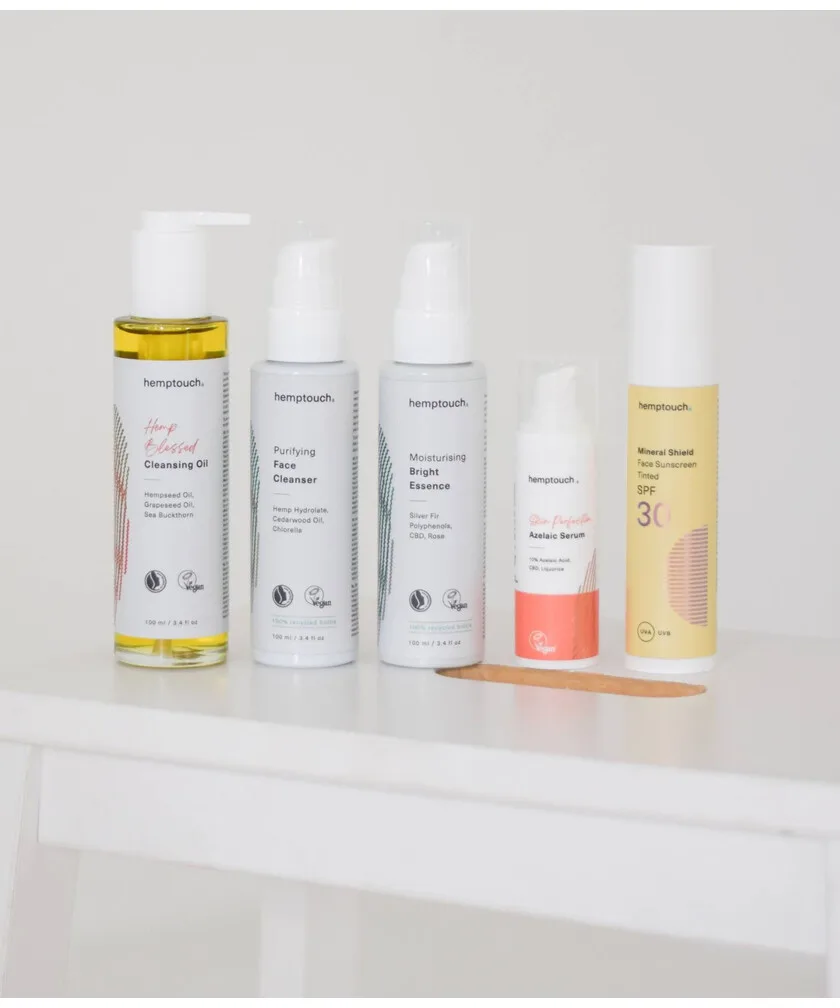
Acid exfoliation is one of the most researched and effective ways to renew the skin. It is based on the action of acids that loosen the bonds between dead skin cells on the surface, accelerating their removal and stimulating natural regeneration.
The result is skin that feels smoother, looks brighter, and appears more even. The strength of exfoliation can range from very gentle to more intensive, depending on the type of acid and its concentration.
Benefits of AHA and BHA acids
There are several well documented benefits of acid based exfoliation. AHA acids, such as glycolic and lactic acid, are proven to improve skin texture by supporting faster epidermal renewal.
They help reduce the appearance of roughness, dullness, and uneven tone. With regular use, they can also soften fine lines, pigmentation, and signs of photo damage. BHA acids, particularly salicylic acid, work differently. Because they are oil soluble, they penetrate pores more effectively, dissolve excess sebum, and help reduce blemishes linked to acne.
Thanks to their anti inflammatory properties, they are especially suitable for skin prone to clogged pores, breakouts, or excess oiliness.

The impact of acids on collagen synthesis
An important aspect of acid exfoliation is its effect on collagen synthesis. Numerous studies confirm that glycolic acid can stimulate fibroblasts, the cells responsible for collagen production, which over time contributes to firmer skin.
Lactic acid, due to its humectant nature, not only exfoliates but also hydrates the skin. This makes it particularly suitable for dry and sensitive skin that does not tolerate more aggressive acids well.
PHA acids as a gentle alternative
In recent years, PHA acids have gained increasing attention. Gluconolactone and lactobionic acid are considered among the gentlest chemical exfoliation options.
Because they have a larger molecular size than AHA and BHA acids, they penetrate the skin more slowly and act more superficially. This results in significantly less irritation. This makes them ideal for sensitive, irritated, or dryness prone skin.
In addition to gentle exfoliation, they offer a strong hydrating effect, as they act as humectants and help retain moisture. PHA acids are also known for their antioxidant properties, meaning they protect the skin from external stressors and further strengthen the skin barrier.
For this reason, they are an excellent choice for regular use, for beginners exploring acids, or for anyone seeking gentle yet effective skin renewal without tightness or redness.
How to choose the right acid for your skin type
Acid exfoliation can be suitable for many skin types, but selecting the right acid is essential.
Oily skin responds well to salicylic acid, which helps cleanse pores and reduce imperfections. Dry skin benefits more from AHA acids such as lactic acid, which combine exfoliation with hydration. For sensitive skin, PHA acids are the most recommended option, as they allow for safe and gradual texture improvement without the risk of irritation.
If concerns are persistent or the skin is highly reactive, consulting a dermatologist is advisable. A specialist can adjust the type and concentration of exfoliation to suit individual skin needs.

Levels of intensity in acid exfoliation
There are different levels of exfoliation intensity.
Superficial exfoliants, commonly found in toners, serums, or masks, work on the upper layers of the epidermis and are suitable for home use. More intensive exfoliations, often involving trichloroacetic acid, reach deeper layers and should be performed by professionals.
Deep exfoliations affect the deeper layers of the dermis and are part of medical procedures aimed at more pronounced skin concerns.
How to use acid exfoliation correctly
Proper use of acid exfoliation is essential for safety and optimal results. Before application, the skin should be clean and free from makeup or other active ingredients that could increase sensitivity. When introducing exfoliation, it is best to start slowly, using lower concentrations and gradually increasing frequency.
After exfoliation, the skin requires gentle care without strong actives. Daily use of a high protection factor is essential, as the skin becomes more sensitive to UV exposure after exfoliation.
Acid exfoliation is a highly effective tool for skin renewal when used thoughtfully and with close attention to the skin’s response.
 Posted by
Barbara Novak
on date , updated on .
Posted by
Barbara Novak
on date , updated on .